
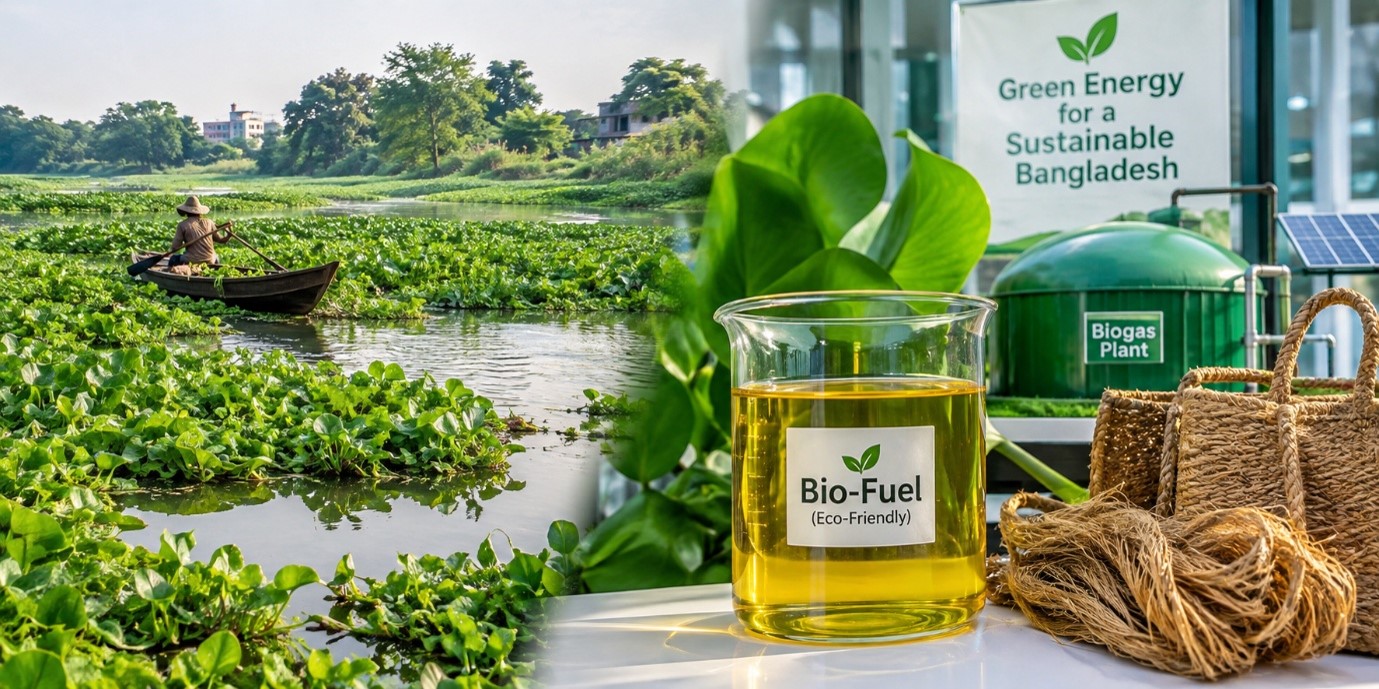
Bangladesh is a riverine country dominated by vast wetlands.
Every year, during and after the monsoon season, extensive areas across the
country’s rivers, canals, haors, and beels become covered with
water hyacinth. Conventionally, water hyacinth is viewed merely as a harmful
aquatic weed, a major obstacle to river navigation, and a severe threat to fish
farming. However, when analyzed through the lens of modern biotechnology, chemical
engineering, and structured business models, this alleged curse can turn out to
be an immense blessing for the national economy. With proper planning and
coordinated action, this freely available aquatic biomass can open new horizons
in resolving our energy crisis, protecting the environment, and creating
employment opportunities.
Sustainable Energy Security - Bio-fuel and Green Power
Given the limitations of fossil fuels and the high cost of
crude oil globally, searching for alternative renewable energy sources has
become the need of the hour. In Bangladesh, water hyacinth presents a highly
promising alternative to our import-dependent energy ecosystem.
Bio-ethanol and Bio-diesel: Compared to woody plants,
water hyacinth contains relatively low amounts of tough lignin, but is
extremely rich in cellulose and hemicellulose. Through acid or enzymatic
hydrolysis, this cellulose is broken down into glucose or simple sugars, which
are then fermented using yeast to produce high-grade bio-ethanol. This
bio-ethanol can be blended with conventional petrol or used directly as a
clean, green fuel. Additionally, components extracted through specialized
conversion processes can produce bio-diesel, serving as a functional
alternative in standard diesel engines.
Biogas and Commercial Methane: Mixing raw water
hyacinth with animal manure or cow dung in specific proportions under anaerobic
digestion yields high concentrations of methane gas. This process significantly
boosts methane density and overall gas production. The generated gas can be processed
to produce electricity via generators, playing a vital role in supplying
cooking gas and off-grid power to households in remote haor and rural
regions.
Eco-Friendly Agriculture and Alternative Industrial Raw
Materials
In agricultural Bangladesh, the unregulated use of chemical
fertilizers is steadily degrading soil health and natural fertility. To
overcome this crisis, water hyacinth-based biotechnology can spark a new
revolution in the agricultural sector.
High-Quality Vermicompost: By facilitating
decomposition through specific earthworm species (Eisenia foetida),
water hyacinth can be converted into vermicompost rich in nitrogen, potassium,
and essential organic nutrients. This organic fertilizer restores soil
fertility, enhances water retention capacity, and improves crop yields.
Processed and packaged vermicompost can be commercialized and sold directly to
farmers and urban gardeners.
Low-Cost Mushroom Cultivation: The market prices of
primary raw materials used in mushroom farming, such as straw or sawdust, are
rising daily. Using biogas slurry or digested water hyacinth as a substrate
enables commercial mushroom farming at a substantially lower cost, reducing production
expenses for growers.
Levulinic Acid and Bio-Hydrogen: Specialized
catalytic processes can extract levulinic acid from water hyacinth—a
high-value chemical raw material widely used in pharmaceuticals, cosmetics, and
plastics. Furthermore, dark fermentation of water hyacinth combined with
industrial wastewater using specific bacteria yields zero-carbon bio-hydrogen
gas.
Green Economy: Export-Oriented Handicrafts and River
Remediation
As global anti-plastic movements gain momentum due to the
environmental harms of plastic and polyethylene, water hyacinth fiber has
created lucrative new opportunities in the international market.
Eco-Friendly Fiber Products: Sun-drying water
hyacinth stems produces strong, durable fibers or yarns that can be crafted
into durable, aesthetic handbags, shopping baskets, mats, lampshades, and home
furniture. Beyond domestic fashion houses, these items hold massive potential
as "Handcrafted Eco-Friendly Products" for export to markets in
Europe, America, and the Middle East, bringing in valuable foreign exchange.
River Bioremediation: The roots of water hyacinth act
as natural biological filters, absorbing textile dyes and toxic heavy
metals—such as iron, zinc, copper, and arsenic—from industrial wastewater.
Offering low-cost biological filtration services at Effluent Treatment Plants
(ETPs) across heavy industries, like garments and leather, can spawn an
entirely new service sector.
Social Impact and Job Creation
Developing a water hyacinth-based industry will create new
employment opportunities for marginal communities living along rivers and
wetlands. During the monsoon season, when rural workers in haor and
low-lying regions face seasonal unemployment, a large number of rural women and
laborers can be engaged in harvesting, drying, and crafting water hyacinth
products. This will boost self-employment in rural areas and revitalize the
rural economy.
Recommendations for Realizing the Potential
The primary obstacles to turning water hyacinth into a
profitable industry are its high moisture content and high transportation
costs. To overcome these challenges, the following steps must be taken:
ü Mechanical
Harvesting Hubs: Installing processing machinery like a Chopper cum
Crusher along riverbanks allows raw water hyacinth to be shredded and
crushed on-site, reducing transport bulk and costs to one-tenth.
ü SME
Support: Providing collateral-free loans on easy terms along with technical
training for young entrepreneurs entering water hyacinth handicraft and
vermicompost production.
ü Public-Private
Partnerships (PPP): Offering policy incentives and government support to
attract domestic and foreign private investors for large-scale bio-ethanol and
biogas plants.
ü Policy
Integration: Incorporating biomass collection into national river-cleaning
drives under a profitable Circular Economy framework.
What was once dismissed as a nuisance or a burden on
wetlands can, through modern technology, become a cornerstone of national green
wealth. Harnessing the commercial potential of water hyacinth is crucial for
mitigating climate change impacts, reducing fuel import dependency, and
building a sustainable green economy. With coordinated efforts from
policymakers, scientists, and entrepreneurs, turning this aquatic weed into an
economic asset is well within reach.
Share this page via
More from Ahmed Jubaer